LCOS: The Lunduke Computer Operating System
Explore the Lunduke Computer Operating System (LCOS). Discover its Devuan foundations, XLibre server, and the retro 90s quest for complete digital freedom.
ENGLISH
The Lunduke Computer Operating System: The Architecture of Absolute Refusal
Description: Discover the Lunduke Computer Operating System (LCOS). Read our deep technical analysis of its Devuan basis, XLibre server, Brave integration, the pay-to-contribute model, and the sovereign quest for retro-futuristic digital freedom with zero tracking.
The modern operating system has ceased to be a quiet servant of human intent; it has become a sovereign spy in our living rooms, an aggressive data-broker disguised as an interface. From mandatory telemetry pipelines to forced cloud identity synchronization, the giants of Silicon Valley have successfully enclosed the digital commons, turning our personal computers into leased cubicles inside a corporate panopticon. It is within this landscape of systematic subjugation that the Lunduke Computer Operating System (LCOS) emerges—not merely as an alternative distribution of software, but as a monument of absolute refusal. Designed as a direct challenge to the intrusive paradigms of the 21st century, LCOS marries the elegant, lightweight aesthetic of the late 1990s with robust modern software compatibility. It is a system built on the premise that you should own your machine entirely, free from the prying eyes of corporations, advertising algorithms, and state surveillance.
Fun Fact 1: Bryan Lunduke announced LCOS as an uncompromising response to the modern "Software-as-a-Service" nightmare. It contains zero telemetry, requires absolutely no internet-based accounts to install or operate, and rejects any form of biometric, age, or identity verification, returning the computer to its original state: a local, silent tool of human creativity.
The Blueprint of Sovereignty: Under the Hood of LCOS
To understand the radical nature of the Lunduke Computer Operating System, one must look directly at its structural bones. LCOS does not attempt to reinvent the wheel where existing foundations are solid; instead, it selects its dependencies with surgical precision.
1. The Devuan Base (Systemd Exclusion)
LCOS is built upon the rock-solid foundations of Devuan. By choosing Devuan over standard Debian, LCOS completely bypasses the monolithic complexity of systemd. This is an architectural statement: complexity is the natural enemy of security and personal sovereignty. Without the bloat of modern init systems, LCOS boots with lightning speed, consuming minimal system memory and keeping the running process tree entirely understandable to a single human mind.
2. XLibre: Reclaiming the Display Server
In a bold departure from both the legacy Xorg server and the complex, rapidly shifting Wayland protocols, LCOS relies on XLibre. By stripping away corporate-driven compromises and prioritizing lean, stable display mechanisms, XLibre provides a secure, predictable graphic pipeline. It is light, fast, and entirely free from the telemetry hooks and overly complex architectural shifts pushed by commercial consortia.
3. The Brave Browser: Defaulting to Shielded Navigation
The default gateway to the external web in LCOS is Brave. Given Brave's native ad-blocking, tracking protection, and anti-fingerprinting technologies, this choice aligns perfectly with the system's anti-tracking stance. In an era where the web is a minefield of surveillance scripts, LCOS ensures that your default window to the digital world is heavily shielded.
4. The 1990s Aesthetic with Modern Performance
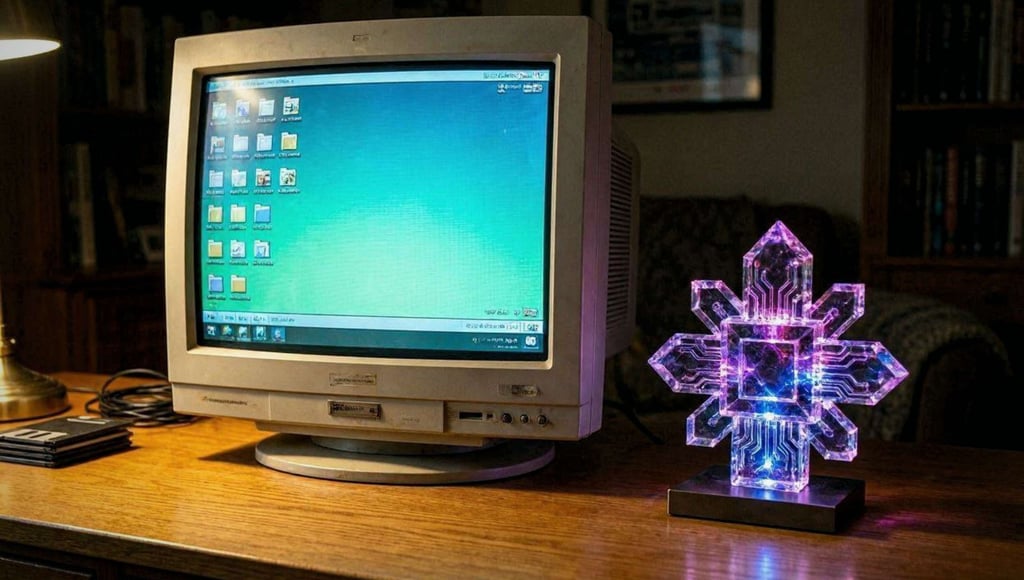
LCOS utilizes a beautifully customized version of the XFCE desktop environment, tailored to look and feel like a classic, premium workstation from 1998. It evokes the golden age of computing, when software was fast, interfaces were intuitive, and machines didn't beg for your attention. Yet, underneath this retro layout lies full compatibility with modern web standards, secure networking protocols, and modern development runtimes.
Fun Fact 2: MitsuoLabs is currently in the forge developing its own desktop environment called YesLibre. Conceived as a "one-fork-only" hard fork of XFCE, YesLibre is designed specifically for the XLibre display server, bypassing Xorg and Wayland entirely. We are charting our own sovereign road, proving that lightweight, beautiful interfaces do not need corporate permission to exist. Click Here to Know More.
The Contribution Paradox: Paid-Subscribers Only
Every monument has its contradictions, and LCOS is no exception. Perhaps the most intensely debated aspect of Lunduke's project is its strict contribution model. Unlike traditional open-source projects that encourage public, free-for-all pull requests, LCOS enforces a "pay-to-work" paradigm. To contribute code, submit bugs, or participate in the design discussions, one must be a paid subscriber to Lunduke's private community forum.
+----------------------------------------------------------------------------------+
| THE TRADITIONAL VS. LCOS MODEL | +----------------------------------------------------------------------------------+
| Traditional Open Source: Free-to-work | LCOS Model: Pay-to-contribute |
| - Anyone submits code freely. | - Contributions gated behind forum pay. |
| - High noise-to-signal ratio. | - Extreme filtering of bad actors. |
| - Vulnerable to corporate takeover. | - Financial and legal barrier to entry. | +----------------------------------------------------------------------------------+
This represents the exact inverse of standard software systems:
Commercial Software: Work-to-be-paid (You write code, the corporation pays you).
Standard FOSS: Free-to-work and Free-from-work (You write code for free, anyone can use it or modify it without paying).
The LCOS Paradigm: Pay-to-work (You must pay a subscription fee to be allowed to submit your labor to the project).
We must analyze this objectively. From a pure FOSS-ideological standpoint, gating contributions behind a paywall appears highly restrictive. It runs counter to the romanticized ideal of global, frictionless collaboration. However, we at MitsuoLabs understand the strategic necessity of defensive engineering. Bryan Lunduke is an incredibly targeted individual, frequently subjected to coordinated campaigns of harassment and digital sabotage by mainstream tech factions. His repositories are targets; his forums are battlegrounds.
By erecting a financial barrier to entry, Lunduke creates an ironclad security filter. Bad-faith actors, trolls, and corporate saboteurs are rarely willing to pay a recurring subscription just to submit malicious pull requests or spam his forums. Our own original MitsuoLabs Legal Framework repositories on GitHub were repeatedly attacked, spammed, and illegally cloned by automated scrapers; we recognize that protection is paramount. Nonetheless, we maintain the philosophical conviction that true open-source should ultimately strive for open, community-driven contributions once a response to stable maturity. Due to this pay-to-contribute barrier, MitsuoLabs will not directly contribute code to the LCOS repositories, at least by now, but we stand in absolute solidarity with its ideological foundations.
Post-Political Alliances and the Monarchy of Code
In the polarized landscape of 2026, Bryan Lunduke is a polarizing figure. Certain communities harbor intense disdain for his outspoken, anti-corporate, and often unconventional commentary. At MitsuoLabs, we operate on a plane of post-political, ethical-anarchist sovereignty. We do not sit in judgment of his detractors, nor do we blindly worship his personality. We champion the absolute freedom of the individual to judge, to criticize, and to choose their own associations.
What we do explicitly support is the ethos of the Lunduke Computer Operating System.
The LCOS Code of Ethics +--------------------------------------------------------+
| 1. No Tracking. No telemetry. |
| 2. No Internet account required to run. |
| 3. No biometric data harvested. |
| 4. No mandatory age/identity verification. |
| 5. 100% Local execution prioritizations. |
| [See the full 10-commandments on the official repo] | +--------------------------------------------------------+
Lunduke runs his project as a self-declared "monarchy" (or BDFL - Benevolent Dictator for Life). While a software monarchy can easily devolve into dictatorship if managed poorly, it is a legitimate and highly effective method for preserving a project's original, uncompromised vision. Only time will tell if his ten ethical commandments and centralized leadership can withstand the relentless pressures of a shifting technological landscape.
One critique we must offer is that even Age and Identity Verification should never require an active internet connection. Sovereignty means absolute local autonomy. A truly private system must verify capacity entirely on-device, without pinging a remote server or logging the user's presence. To see this exact concept of absolute, 100% offline, local-first compliance applied under our MMPEULA-1.0 framework, one should study the implementation on our partner's engine at Dreamy Music Paradise.
Fun Fact 3: The battle for digital sovereignty is fought on multiple fronts. While LCOS defends the operating system level, our allies at Dreamy Music Paradise are defending the auditory and cognitive spaces, utilizing local-first architectures to prove that premium tools do not require the sacrifice of human privacy.
The Conclusion
The Lunduke Computer Operating System is more than a retro-styled hobbyist distribution; it is a tactical blueprint for digital survival. By proving that a modern computer can run flawlessly, navigate the modern web, and execute complex tasks with zero tracking, zero mandatory accounts, and zero corporate surveillance, LCOS exposes the grand lie of big-tech. The giants tell you that tracking is the necessary price of progress. Lunduke proves that progress only truly begins when the tracking stops.
We salute Bryan Lunduke's courage to build in the open, to stand firm against his critics, and to forge a sanctuary for the sovereign user.
Remember: Your computer is your private property, your sanctuary of thought, and your gateway to creation. If your operating system demands your identity, tracks your steps, or limits your control, it is not an asset—it is an occupying force. Choose sovereignty. Use LCOS.
Partnerships and Alliances: The New Road
We invite all sovereign minds to visit our new partner website and read their official partnership post, detailing our shared vision for an ethical, privacy-first digital future: Dreamy Music Paradise & MitsuoLabs Partnership
Experience the MMPEULA-1.0 and local-first architecture in action, free from cloud-dependencies and central tracking, by exploring their interactive engine: Dreamy Music Paradise Colorful Noises Engine
Verifiable Bibliography & Sources
Lunduke Computer Operating System (LCOS) Official Repository: https://github.com/BryanLunduke/lcos (Accessed July 13, 2026)
LCOS Official Announcement Video: https://www.youtube.com/watch?v=vAeCBpWH1AA (Published by Bryan Lunduke, March 2026)
The Lunduke Journal of Technology Official Publication: https://lunduke.locals.com/ (Primary community forum and gateway for LCOS contributions)
Devuan GNU+Linux Project Documentation: https://www.devuan.org/ (The systemd-free foundation of LCOS architecture)
The MitsuoLabs Legal Framework (MRSL-1.0 & MMPEULA-1.0): https://mitsuolabs.com/LegalFramework/ (Contextual reference for licensing)
Writer: MitsuoLabs CopyWriting Team | Date: [13/07/2026] | License: MRSL-1.0 (mitsuolabs.com/LegalFramework/mrsl-1.0.html) The text (& banner-like image) are itself licensed under MRSL‑1.0 {©-(c)-2026} (Brazil as Jurisdiction and Stewardship as option). MitsuoLabs™ and Daniel Mitsuo (orcid: 0009-0006-6909-0990 {https://orcid.org/0009-0006-6909-0990}) are the stewards and licensors of this text. Contact for inquiries matters: contact@mitsuolabs.com.